SharePoint always lacked one thing: evidence.
After years of helping organisations migrate to Microsoft 365 and build governance frameworks, I kept running into the same wall. Site Owners felt lost when they were given ownership of their site. Information Management understood the risks of unmanaged SharePoint sites. IT had the data — but not the tooling. In the end, nobody had a language they could share.
Conversations with Site Owners went in circles. "Your library is messy." "How do you know?" "Well… it feels that way." That's not good enough. That's never good enough.
The effect
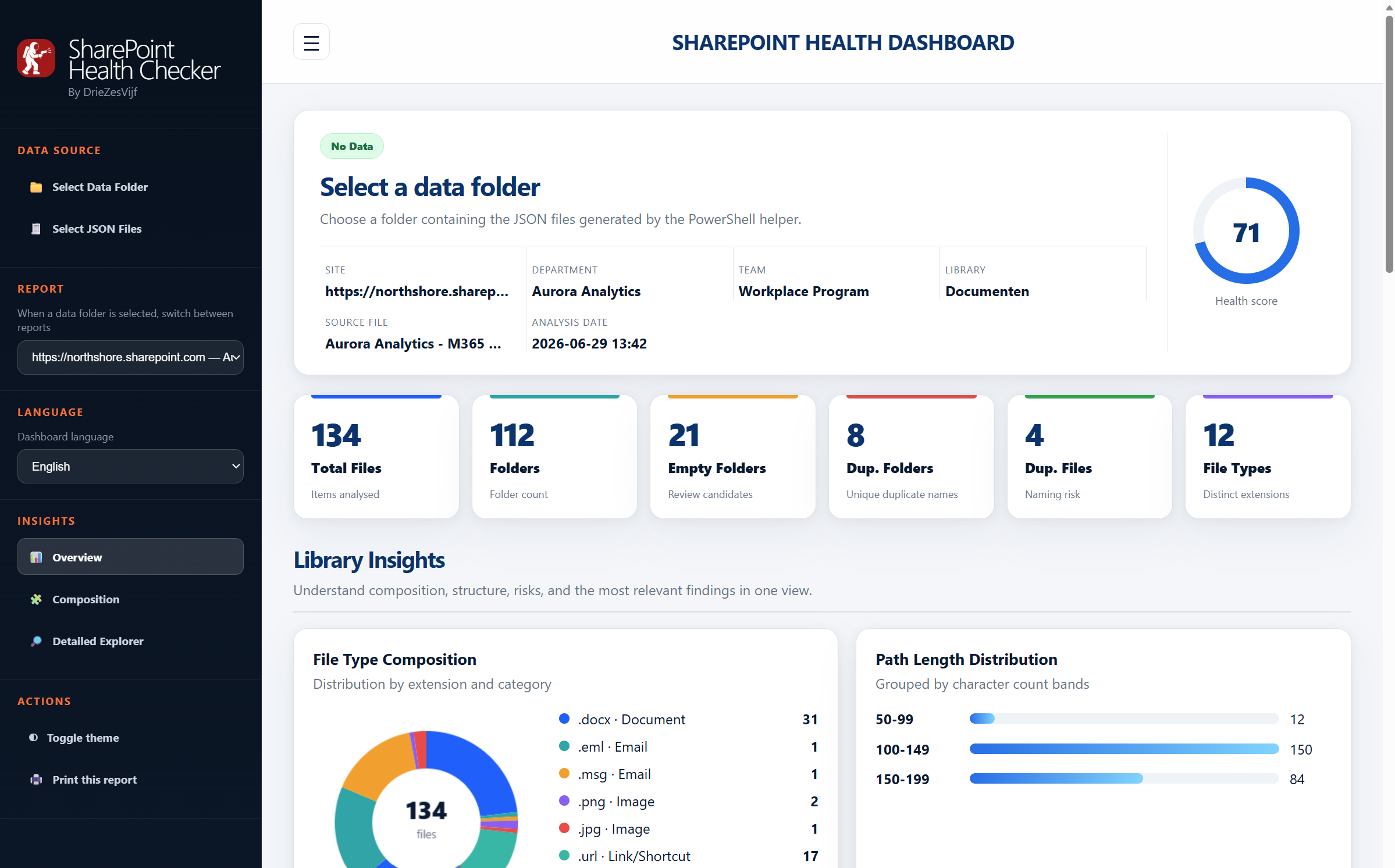
We built SharePoint Health Checker because we needed a tool to bring into a meeting with Site Owners and say: you have 82 empty folders, your deepest path is 14 levels, and three folders contain 90% of all files. Suddenly the conversation changes. Suddenly they saw their data and understood why they couldnt find things. They understood why they need a controlled structure. Suddenly we had something to work with.
My Health Score improved within 2 weeks. My colleagues actually helped me organise our SharePoint sites. This convinced me we're already doing better and getting back in control!
— Mannie Lau, Adoption Specialist, Erasmus University40+ years of combined SharePoint experience. Built because we needed it ourselves — not to sell a product.
The health score opens a dialogue. IM can now talk about structuring, moving to Teams, or cleaning up — with facts, not feelings.
We support Site Owners where they work — at the library level. Not a vague tenant-wide overview that nobody acts on. We talk about the documents you worked on yesterday.
Measure regularly. Prove improvement. Turn one-off cleanup into a repeatable governance cycle with evidence at every step. This will make the change.